
The Climate Smart Irrigated Agriculture Project (CSIAP) continues to take proactive measures to enhance the productivity and climate resilience of smallholder farmers in vulnerable agricultural areas. As part of this mission, CSIAP is being implemented in selected areas across the country, including the Southern and Uva Provinces, where agriculture remains the backbone of rural livelihoods and is particularly susceptible to the impacts of climate change. To ensure the effective implementation of project interventions and to monitor ongoing activities, the Deputy Project Director’s Office in the Southern and Uva Provinces maintains a consistent presence on the ground. A dedicated team, led by Deputy Project Director Mr. D. M. L. Bandaranayake, works tirelessly to oversee project progress, engage with farmer communities, and address implementation challenges in real time. Their efforts are crucial in driving forward the CSIAP’s goal of building a more sustainable and climate-resilient agricultural sector.
A high-level field observation was carried out to assess the current status of project activities and to gather firsthand insights from the field yesterday (17th). The monitoring team included Mr. D. M. L. Bandaranayake, Mr. Thisara Bandara (Social Safeguard & Gender Development Officer for Southern and Uva Provinces), Ms. Sharmila Shanmuganathan (Social Safeguard & Gender Development Officer ), and Mr. Samantha Mallawaarachchi (IEC & ICT Specialist) from the Project Management Unit. This visit reflects the team's continued commitment to effective implementation and inclusive development in the agriculture and water sectors, especially for communities most vulnerable to climate challenges.
During the field visit, the team inspected several sites below.
Transforming Rural Livelihoods Through Tank Rehabilitation: Siyambalagaswewa in Weerawila

Recognising the potential of Siyambalagaswewa to improve agricultural resilience and rural livelihoods, the CSIAP undertook a comprehensive rehabilitation of the tank. With an investment of Rs. 25 million, the project aimed to modernise the tank's infrastructure and expand its irrigation capacity. The rehabilitation work was implemented by Nethmi Construction Company under the guidance and supervision of the relevant government authorities.
The
scope of rehabilitation work included:
This shift has resulted in:

The construction of this lined channel is expected to bring numerous long-term benefits. By providing a durable and well-structured water conveyance system, it will minimise water wastage, ensure timely delivery to fields, and reduce maintenance costs related to erosion and leakage. Additionally, the improved irrigation system will enhance crop productivity, bolster the resilience of local agriculture to climate variability, and support better livelihoods for the farming community. This successful collaboration between the Samagi Farmer Organisation and CSIAP stands as a model of community-driven infrastructure development, aimed at achieving sustainable agricultural growth and effective water resource management.
.jpg)
In its continued efforts to support and safeguard smallholder agriculture, the CSIAP has not only focused on improving irrigation infrastructure but also addressed another pressing issue faced by the local farming community — frequent crop damage caused by wild animals. To mitigate this threat and ensure the safety of cultivated lands, CSIAP facilitated the installation of a 2.067-kilometre-long solar-powered electric fence around the command area of the Siyambalagaswewa tank in 2023. This strategic intervention now protects 40 acres of paddy fields cultivated during both the Maha and Yala seasons, significantly reducing the risk of crop loss and improving farmers’ confidence in their agricultural investments.
The environmentally friendly fence was erected for Rs. 1.24 million, reflecting CSIAP’s commitment to sustainable and eco-conscious solutions. Importantly, the Samagi Farmer Organisation has assumed full responsibility for the maintenance and upkeep of the fence — a testament to the strong sense of community ownership and the long-term sustainability of the initiative. This integrated approach — combining infrastructure development with proactive crop protection — underscores CSIAP’s holistic strategy in enhancing the productivity, resilience, and livelihoods of rural farming communities.
Conclusion
The
rehabilitation of Siyambalagaswewa stands as a successful model of climate-smart
agriculture in action. It not only enhances agricultural productivity but also
strengthens the economic resilience of rural communities, promotes sustainable
resource use, and fosters community-led solutions to long-standing challenges. Through
strategic infrastructure development, integrated planning, and community
engagement, CSIAP continues to play a pivotal role in transforming agriculture
and rural livelihoods in the Hambantota District and beyond.
Rehabilitation
of Murungawewa in Bandagiriya ASC, Hambantota: A Step Toward Year-Round
Cultivation As
part of ongoing efforts under the CSIAP to strengthen agricultural resilience and improve water management in
the dry zone, the Murungawewa tank, situated in the Bandagiriya Agrarian
Service Centre (ASC) division of Hambantota District, is undergoing
comprehensive rehabilitation. The
project is expected to directly benefit 10 farmer families, enabling the cultivation of
30 acres of farmland that have long been dependent on limited seasonal
rainfall. The total cost of the rehabilitation amounts to Rs. 33.24 million,
and the construction activities are being undertaken by C. J. Constructions
Company.
As
part of ongoing efforts under the CSIAP to strengthen agricultural resilience and improve water management in
the dry zone, the Murungawewa tank, situated in the Bandagiriya Agrarian
Service Centre (ASC) division of Hambantota District, is undergoing
comprehensive rehabilitation. The
project is expected to directly benefit 10 farmer families, enabling the cultivation of
30 acres of farmland that have long been dependent on limited seasonal
rainfall. The total cost of the rehabilitation amounts to Rs. 33.24 million,
and the construction activities are being undertaken by C. J. Constructions
Company.


A
Sacrifice for a Sustainable Future
Traditionally,
farmers in this area have only been able to cultivate during the Maha
season due to the scarcity of water. However, with the completion of the
current rehabilitation, farmers will soon be able to engage in three full
cultivation seasons, significantly increasing productivity and income levels. This
year, for the first time in many years, the area received adequate rainfall,
raising hopes among the farming community for Yala cultivation. However,
recognising the long-term benefits of the tank rehabilitation, the farmers
voluntarily agreed to forgo Yala season cultivation to facilitate artificial
drawdown of the tank—an essential step to allow rehabilitation works to proceed
uninterrupted.

A
Farmer’s Transformation: Jinasiri Sudusinghe’s Journey to Prosperity through
CSIAP

Life
Before CSIAP: The Struggles of a Committed Farmer
For
years, Mr. Sudusinghe toiled on his land, committed to his role as a food
producer, but his efforts were hindered by severe limitations. He lacked access
to adequate financial resources to purchase essential agricultural inputs such
as seeds, fertilisers, and irrigation equipment. Equally challenging was the
absence of any formal training or exposure to modern, climate-resilient
agricultural practices. Despite his dedication, farming remained a subsistence
activity for Mr. Sudusinghe. He and his family lived with uncertainty, unable to
predict yields, cope with water shortages, or access knowledge that could
unlock the full potential of their land.

Under
the project, Mr. Sudusinghe received:
Perhaps
most importantly, the project provided access to formal training. His four sons
were enrolled in the Climate Smart Farmer Training School at Thirappane, where
they received in-depth instruction on sustainable agricultural practices, pest
and disease management, water-saving irrigation, and crop diversification. Upon
completing their training, they passed on their knowledge to Mr. Sudusinghe,
enabling the entire family to shift toward smarter, more efficient farming.


A
Heartfelt Message of Gratitude
Standing
in his thriving field, surrounded by his sons, farmhands, and a rich tapestry
of crops, Mr. Dhinasiri Sudusinghe reflects with gratitude:
“ the CSIAP
didn’t just help me grow more crops—it gave me and my sons a future. We are
stronger, more knowledgeable, and more hopeful. My heartfelt thanks to the
CSIAP for uplifting our lives and showing us what’s possible.”
A
Model for Climate-Smart Agriculture in Sri Lanka
Mr.
Sudusinghe’s story is more than just a personal triumph—it serves as an
inspiring model for what can be achieved when technology, training, and support
meet commitment and community spirit. Through the CSIAP’s timely intervention,
one farmer's life has been transformed, and a ripple effect of prosperity has
begun to spread across his village.
Rising
from Struggles to Stability: Nadeesha and Chamara’s Success through the CSIAP
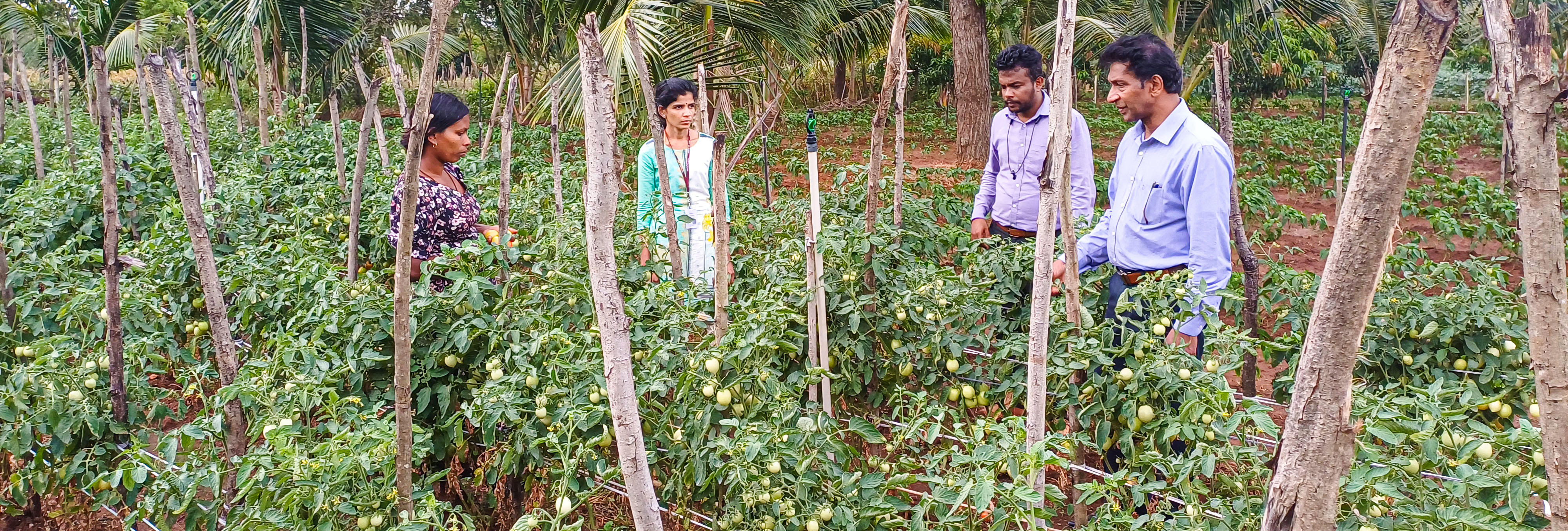
Before
CSIAP: The Burden of Farming Without Support
In
those early days, the couple’s struggles were relentless. They often found
themselves investing more in cultivation than they earned in return. Rising
input costs, unpredictable weather, poor irrigation facilities, and limited
exposure to modern farming techniques placed their livelihoods at constant
risk. There were moments of deep discouragement when they wondered if all their
hard work would ever pay off. They lacked not just equipment, but hope.

This
was more than a project—it was a lifeline.

A
Dramatic Improvement in Income and Quality of Life
The
impact of the project has been tangible and significant. Before CSIAP’s
support, the couple earned an average of Rs. 80,000 per month—barely enough to
cover household and farming expenses. Now, their monthly income exceeds Rs.
130,000, allowing them not only to cover costs comfortably but also to save,
reinvest, and plan for the future. With their improved financial status,
Nadeesha and Chamara have enhanced their standard of living, ensured better
education and nutrition for their children, and gained newfound respect in
their community as successful, climate-smart farmers.
Empowering
a Woman Farmer’s Voice
For
Ms. Nadeesha, the journey has been deeply personal. As a woman in agriculture,
she now feels more empowered, knowledgeable, and confident. She plays an active
role in decision-making on the farm and in managing finances. She serves as a
role model for other women in her village, proving that with access to the
right opportunities, women farmers can not only participate but also lead in
climate-smart farming.

Conclusion:
A Story Worth Replicating
The
story of Nadeesha and Chamara reflects the success of CSIAP’s mission: to
uplift rural farming families through sustainable, climate-smart agriculture.
They
are a compelling example of how investing in knowledge, sustainable technology,
modern tools, and financial relief and inclusive training can transform not
only fields but entire futures. Their success highlights the critical role that
targeted development projects like CSIAP can play in strengthening climate
resilience, empowering rural families, and building a food-secure future for
Sri Lanka. Their journey is not just their own—it’s a story that inspires other
families in their community to believe that change is possible. They are not
beneficiaries any more—they are ambassadors of change.
Story and photographs by Samantha Mallawaarachchi, IEC & ICT specialist, CSIAP
Posted by CSIAP Sri Lanka Read full article Published Date : 2025-07-18